When people say the word "sushi", almost everyone pictures the same thing: a chef behind a counter, a slice of raw fish, a small pillow of rice shaped in seconds and eaten in one bite.
I spent thirty-five years making and teaching sushi in Britain, and even I have to admit that this picture — nigiri sushi — has completely won the world over. But every winter, when I go home to Osaka, I am reminded that it is only half of the story.
The other half is older, quieter, and in many ways closer to where sushi actually began. It is called Osaka sushi. So today, let me introduce you properly.
Sushi Began as a Way of Keeping Fish, Not Eating It Fresh
Here is something that surprises many of my students: sushi did not start as fresh food. It started as preserved food.
Centuries before refrigeration, fish in Japan was salted and packed with rice so that fermentation would keep it safe to eat. Over time, people grew impatient with waiting months for fermentation, and vinegar came to stand in for it — vinegared rice, pressed firmly together with cured or cooked fish, could be made in the morning and enjoyed all day.
This pressed style, called oshizushi, flourished in the Kansai region — Osaka, Kyoto and the towns around them. It was the mainstream of sushi for generations.
Nigiri, the hand-formed style with raw fish, came much later, as the fast food of nineteenth-century Edo (today's Tokyo): quick to make, quick to eat, and dependent on the freshest possible fish from the bay. It was brilliant — and it eventually spread everywhere. But in Osaka, the older tradition never disappeared. It simply kept refining itself.
Hakozushi: "A Kaiseki Meal in a Little Box"
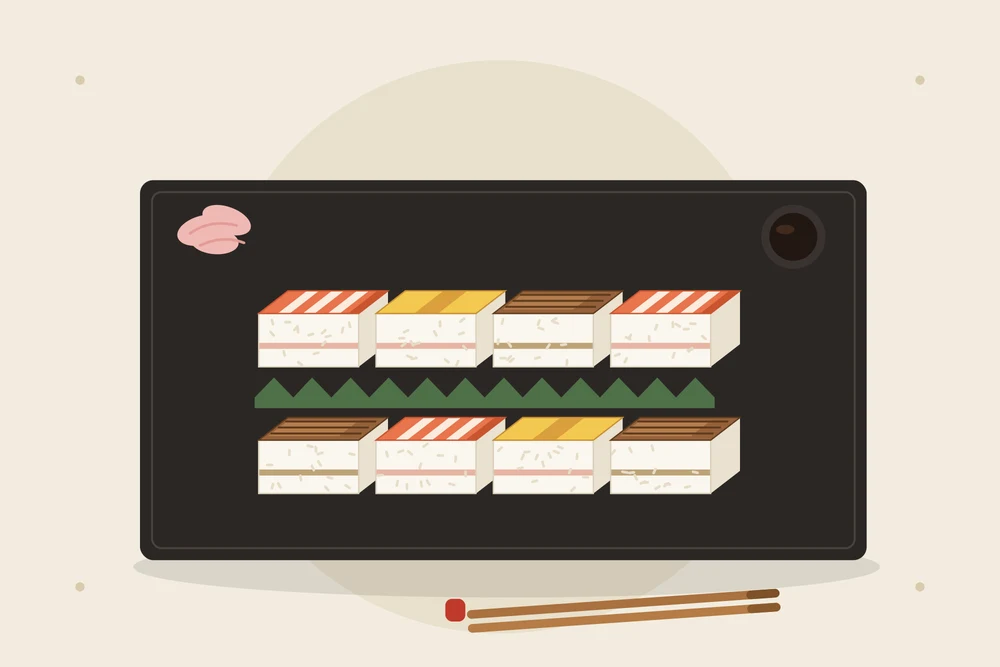
The crown jewel of Osaka sushi is hakozushi — box-pressed sushi.
Vinegared rice is laid into a small wooden (or nowadays plastic) mould, layered with carefully prepared toppings — simmered conger eel brushed with sweet glaze, prawns, cured sea bream, sheets of golden omelette — then pressed, turned out, and cut into neat, jewel-like pieces.
Nothing on a piece of hakozushi is simply "raw fish on rice". Every single topping has been worked on: simmered, grilled, marinated or cured. In Meiji-era Osaka, sushi shops competed to make it more and more refined, and the finished box came to be praised as nisun-roppu no kaiseki — "a full kaiseki meal in a box just two and a half inches square".
That phrase tells you everything about the difference in philosophy. Edo-style nigiri celebrates the fish; Osaka sushi celebrates the craftsmanship.
The Osaka Family: Battera, Rolls, and Steamed Sushi
Hakozushi has some wonderful relatives, and you will meet them all over the city:
Battera — pressed mackerel sushi with a translucent sheet of sweet kelp on top. The name, charmingly, comes from the Portuguese word bateira (a small boat), which the shape of the original mould resembled.
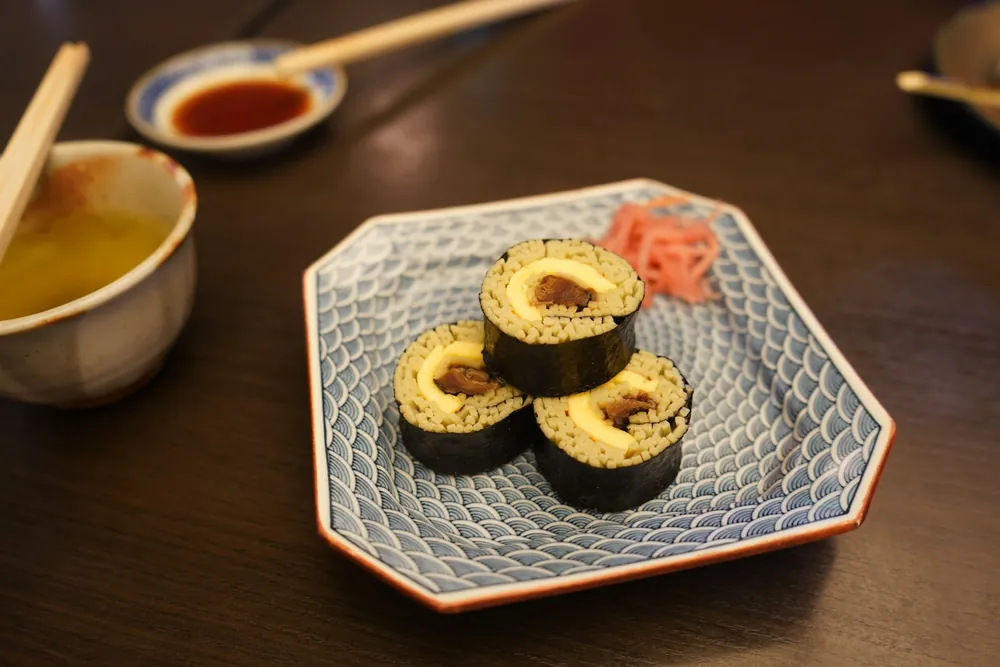
Futomaki and hosomaki — thick and thin rolled sushi. Kansai-style futomaki is a generous, colourful roll of omelette, shiitake, cucumber and more, sliced to reveal a beautiful cross-section. It is festival food, picnic food, family food.
Inari — seasoned sushi rice tucked into sweet, juicy pockets of fried tofu. Humble, beloved, and impossible to stop eating.
Mushizushi — steamed sushi, a warm winter speciality you will find in Osaka when the weather turns cold. Yes, warm sushi! It sounds strange until the first mouthful, and then it makes perfect sense on a chilly December evening.
Why Osaka Sushi Is the Perfect Sushi to Learn
After decades of teaching, I have come to a slightly heretical conclusion: for a home cook, Osaka sushi is a better place to start than nigiri.
First, there is no anxiety about sourcing sashimi-grade raw fish — a real obstacle for students back home in Britain. Osaka sushi is built on cooked, cured and vegetarian-friendly ingredients you can buy with confidence.
Second, it is forgiving. Nigiri lives or dies in the three seconds it takes to shape it, which is why chefs train for years. A pressed box or a rolled futomaki rewards care rather than speed. Beginners produce genuinely beautiful results on their first afternoon — I have watched it happen hundreds of times.
And third, it keeps. Osaka sushi was designed from the beginning to be made ahead and carried — to the theatre, on a journey, to a celebration. Make it at home and it will still be delicious hours later at a party or picnic. Try that with nigiri and you will be disappointed.
And in the coming weeks, I will be visiting some of Osaka's most historic sushi houses — including the shop where hakozushi itself was born in the 1840s — and reporting back here in the Japan Food Diary. Stay tuned.
Further Reading
If this article has left you curious about how sushi really evolved, I warmly recommend Oishii: The History of Sushi by Eric C. Rath — the first full history of sushi written in English. It tells, with far more depth than I can here, the story I have only sketched: how sushi began as preserved fish, and how the pressed sushi of Kansai flourished long before Tokyo's nigiri was ever invented.
As an Amazon Associate I earn from qualifying purchases.
Photos by Yosuke Ota and Laura Barry on Unsplash